

Behind the Mask
Ash Wednesday, Carnival and the Invitation to Be Known

There is a moment, while walking through Venice during Carnival, when you stop trusting your eyes. A figure glides toward you down a narrow calle doning a silk cape, gilded bauta mask, tricorn hat. Is this a man or a woman, a student or a senator, a local or a tourist from Tokyo who simply rented a costume this morning? That is precisely the point. For several days each year before Lent begins on Ash Wednesday, the city of Venice, Italy, becomes a place where the face you were born with is considered optional. The crowds pulse and swirl with the uncanny joy of people who have, at least temporarily, put down the burden of being themselves.
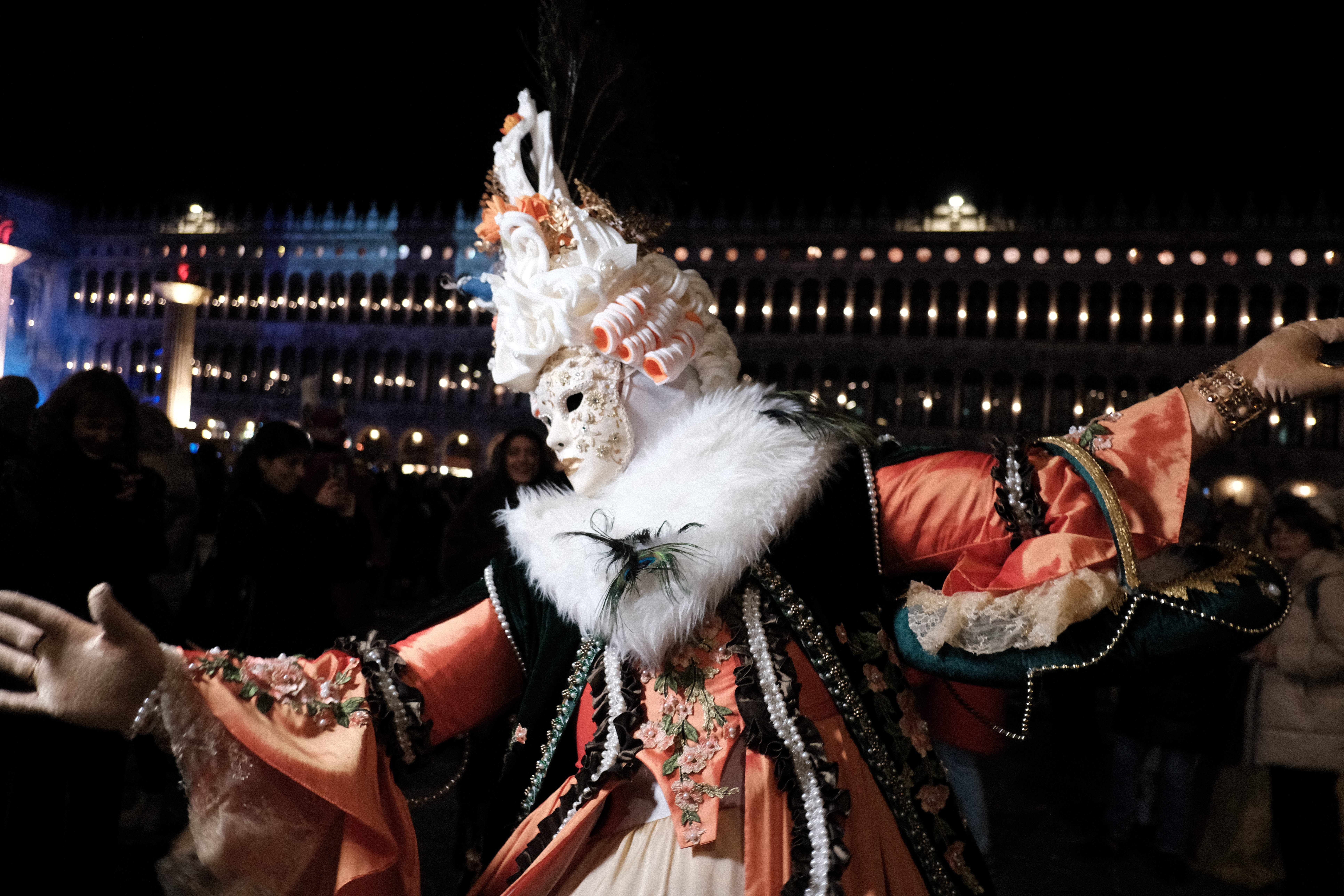
I was there last week, walking those streets and taking photographs. I found myself drawn not only to the spectacle but by something harder to name. There is a particular feeling that overtakes you in a crowd of masked strangers. Part of it is the festivity, the giddy looseness that carnival always promises. But beneath that is something older and stranger: a recognition that the person you usually present to the world is also, in some sense, a costume. And that the mask you wear every day to your job, your family, your social media followers may fit you no better than the one a stranger rents for Carnival.
Carl Jung had a term for this. He called it the Persona.

Jung borrowed the term from the ancient theater, where persona referred to the mask worn by actors on stage to show which character they were playing. For Jung, the persona signifies something universal: the face we create for public life, the role we play in the ongoing theater of social life. “The persona,” he wrote, “is that which in reality one is not, but which oneself as well as others think one is.”
This is not a condemnation. Jung was mindful of this. A functioning persona is essential to healthy living. Without it, we wouldn’t be able to navigate the world with coherence or kindness. We adjust ourselves differently at a funeral than at a birthday party, with a child than with a colleague. We modify, adapt, put on, and take off appropriate faces. This is not deception; it’s social intelligence, the foundational grammar of being a person among others. The problem, Jung emphasized, occurs when we forget that the mask is just a mask. If we become so identified with the persona that we mistake it for our true self.
“A man cannot get rid of himself in favour of an artificial personality without punishment. Even the attempt to do so brings on, in all ordinary cases, unconscious reactions in the form of bad moods, affects, phobias, obsessive ideas, backsliding vices, etc.”
The symptoms Jung described, the anxiety, the exhaustion, the feeling of being trapped in a role, are the psyche’s way of signaling that something real underneath the performance exists and that it cannot be silenced forever.
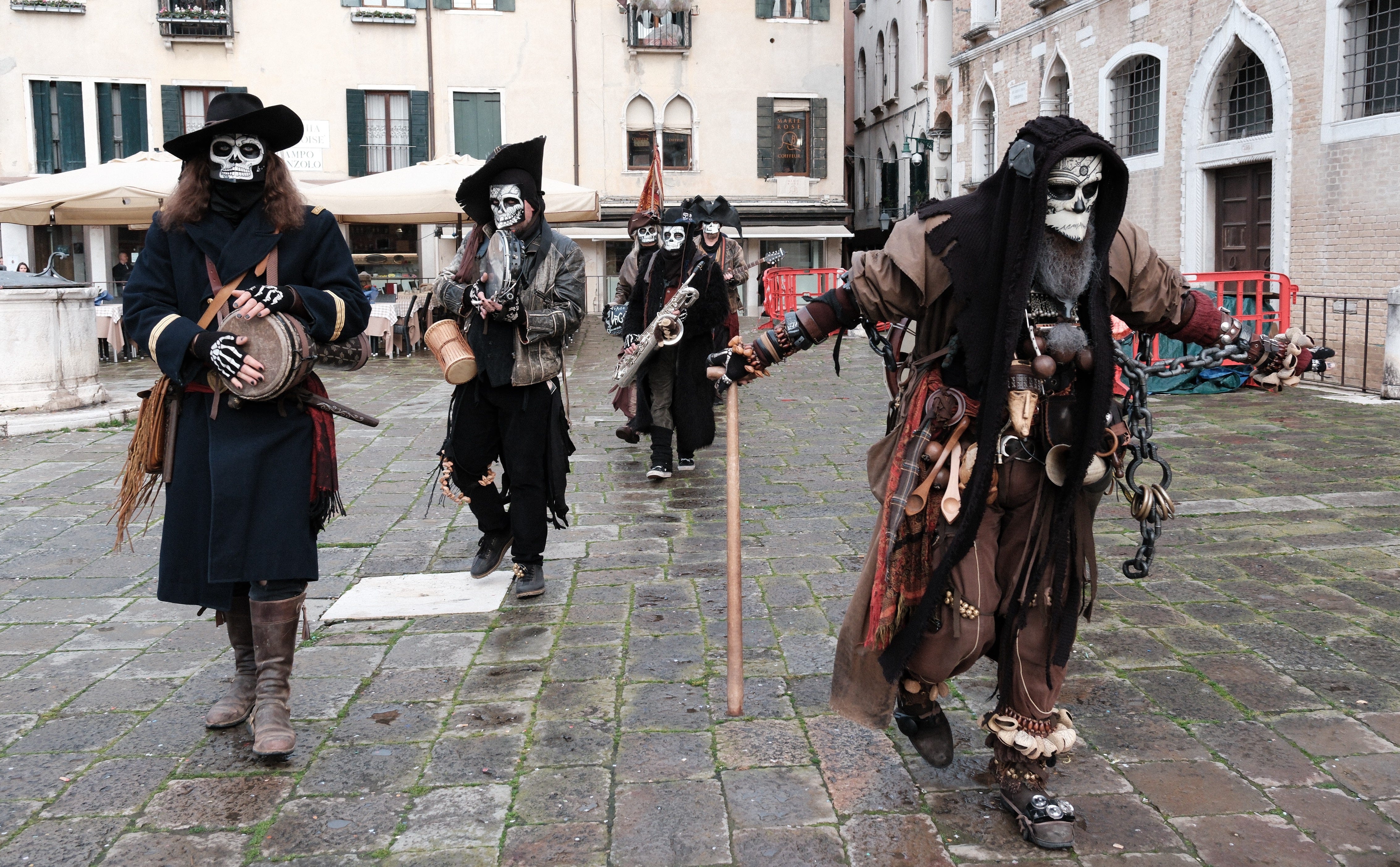
Jung spent his early years in Basel, Switzerland, a city famous for its own version of Carnival. The Basler Fasnacht, held every year on the Monday after Ash Wednesday, is Switzerland’s largest carnival and the oldest Protestant carnival in the world. It begins exactly at 4:00 a.m., when the city’s utility company turns off all the lights. In that sudden darkness, thousands of participants wearing elaborate masks and playing piccolos and drums emerge and start moving through the streets. People who have experienced it describe the experience as disorienting, uncanny, and strangely sacred: the city’s usual face is turned off, and something older and less controlled takes its place.
Jung himself almost certainly experienced Fasnacht firsthand, and scholars of depth psychology have long recognized the link between the festival and his evolving ideas. The philosopher Bernardo Kastrup described it as “a living evocation of the mythical world of the obfuscated psyche.” The festival’s darkness, its anonymity, its intentional disruption of normal social roles, worked on participants like a ritual loosening of the persona. Something that can’t be expressed in daylight is spoken. Something that can’t be felt in one’s professional costume is experienced.
What the carnival tradition, whether in Basel, Venice, Rio, or even the drunken version in New Orleans, seems to understand is that the mask can be both a doorway and a disguise. When the usual persona is set aside with social permission, something else emerges—grief, longing, wildness, or tenderness—that the everyday face has been hiding. Paradoxically, the mask can let you tell the truth.

Which brings us to this moment, as the stakes of persona have never been higher or more visible.
We are engaged in a uniquely historic experiment in shaping personas. Social media platforms act as factories for creating identities. Instagram and similar sites motivate us to develop a polished public image and reward us for doing so. We select our best photos, craft our most memorable quotes, and present the version of ourselves we hope to become. The technology is new; the psychological pattern is as ancient as masks. Yet, there is a crucial difference: the feedback loops are now immediate and relentless. The platform evaluates our persona’s success through likes, follows, engagement rates, and shares. We quickly learn which version of ourselves connects with the audience. As a result, we adapt and refine ourselves accordingly.
The result is a strange doubling of the self. There is the person who woke up this morning, anxious and imperfect, drinking coffee and avoiding a difficult email. And there is the persona that person presents online: confident, purposeful, thriving. The gap between them isn’t necessarily dishonest. It might be aspirational, like the face we hope to grow into. But when the gap becomes a chasm, and the performance is the main focus while the person beneath it is starved for attention, something has gone wrong. The mask has become a trap.
Jung’s warning resonates strongly: those who reward a particular persona with money, admiration, followers, and engagement create an environment in which that persona can consume the person entirely. The “social strong man,” he observed, is often in private life “a mere child where his own states of feeling are concerned.” We might say the same of the social media influencer who performs contentment for millions while quietly falling apart, or the political leader who has maintained a persona of strength so long that vulnerability has become physiologically impossible.
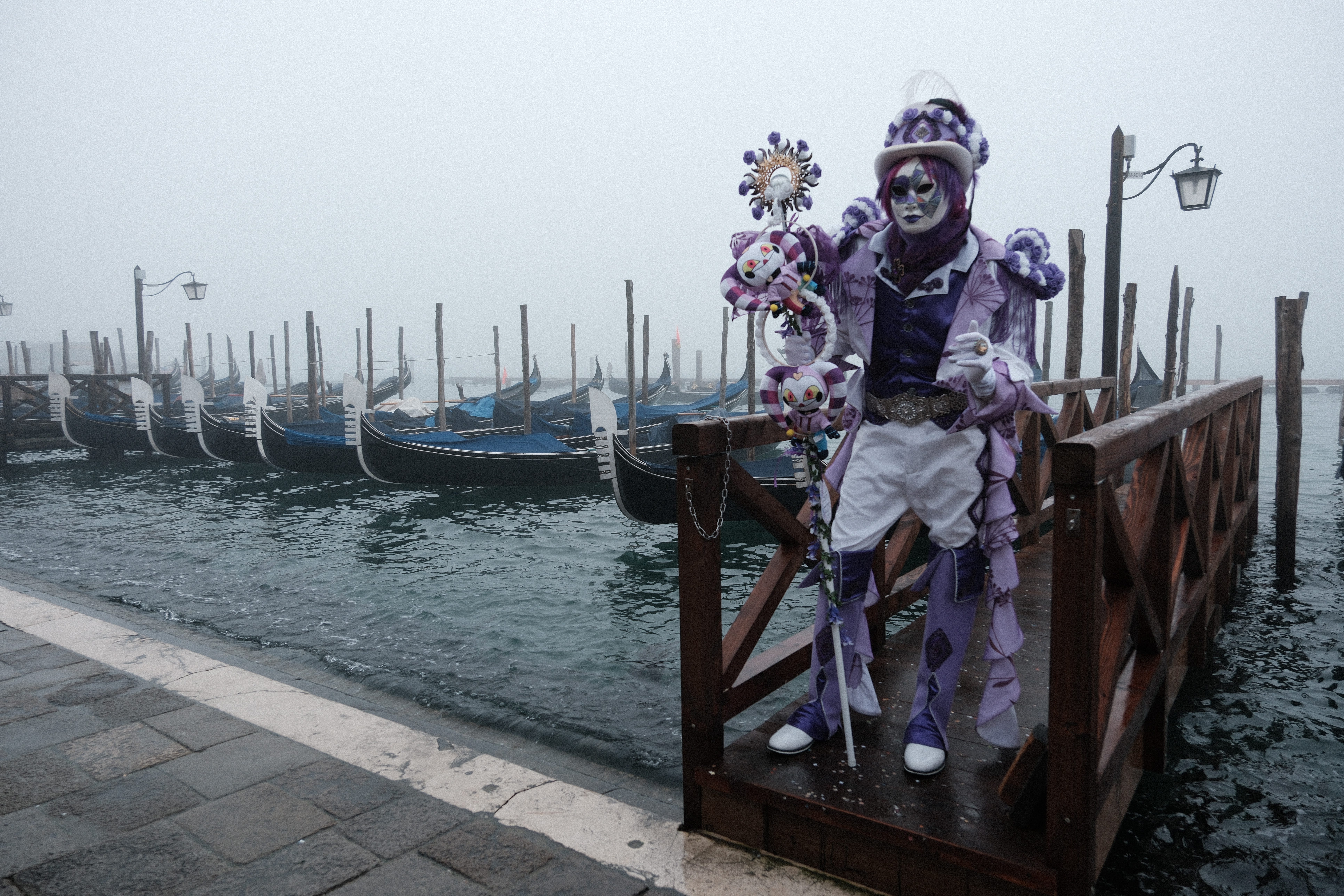
It is worth pausing here to note that this is not only a modern problem. The question of the mask, of the gap between the public face and the hidden self, runs throughout human history. And it runs, with particular urgency, through the pages of the New Testament.
Paul’s letters are filled with symbolic language, not just words, but images. When writing to the churches at Ephesus and Colossae, he repeatedly uses the metaphor of removing old garments and putting on new ones: shedding the old self and embracing a new identity. In Ephesians, he emphasizes the need to “put off your old self, which belongs to your former manner of life” and to “put on the new self, created after the likeness of God in true righteousness and holiness.” In Colossians, he encourages believers to “put off” anger, malice, slander, and especially falsehood. “Do not lie to one another,” he writes, “seeing that you have put off the old self.”
The resonance with Jungian language is powerful enough to stop you. Paul isn’t, of course, referring to the persona in Jung’s technical sense. But he’s describing the same human challenge: the gap between the face we present and the self we truly are; how social performance and self-protection can turn into a kind of spiritual armor that we no longer know how to remove; the cost, in both psychological and theological terms, of mistaking the mask for the face.
St. Paul’s view is mainly about community and relationships: you can’t uncover your true self in isolation. The new self isn’t found by being alone in a room; it’s shown in the presence of others doing the same work. Within a community that, as he writes to the Colossians, is marked by “compassionate hearts, kindness, humility, meekness, and patience,” one can be embraced. The place where you can finally remove the mask is also the place where your unmasked face will be received with love.
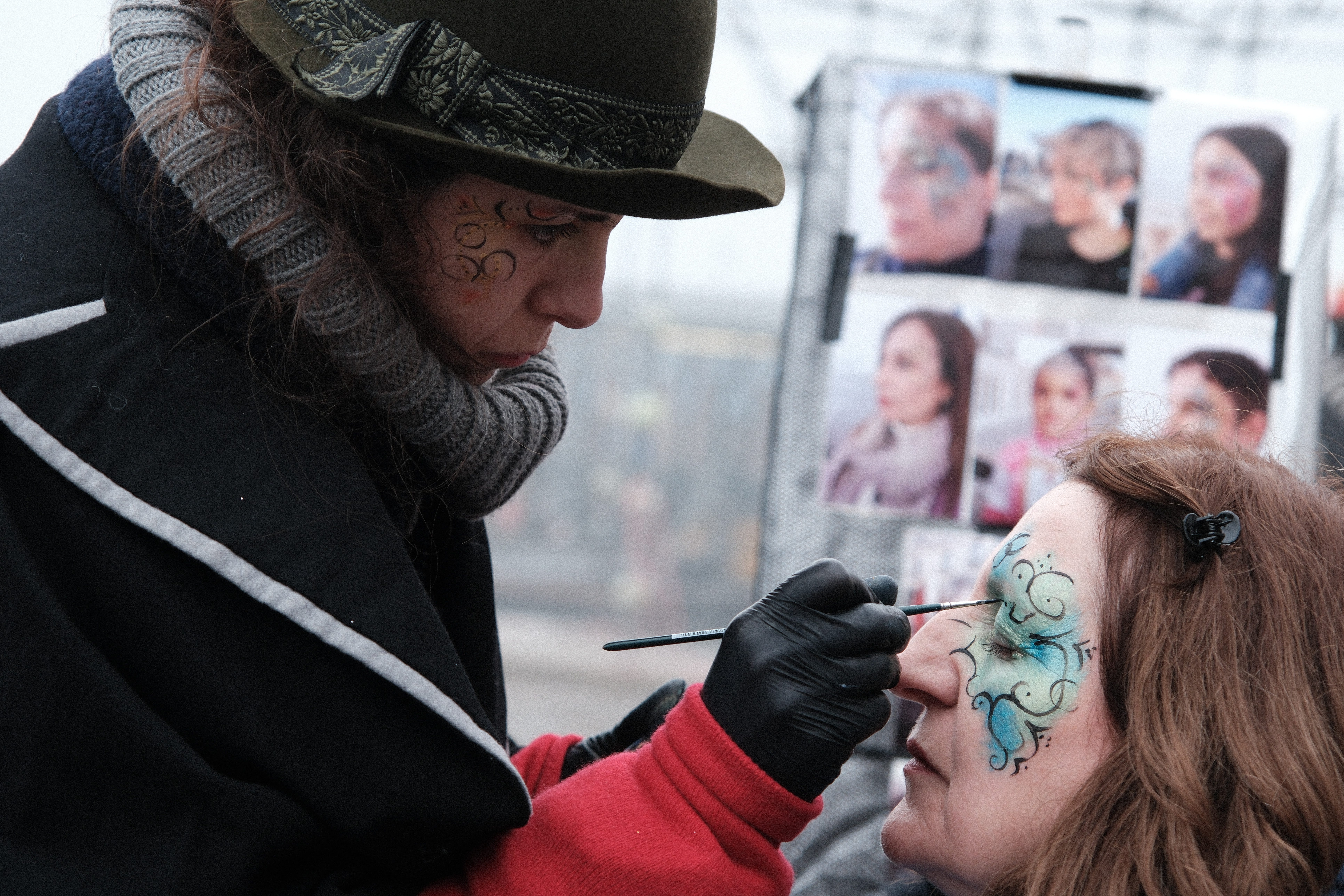
Today is Ash Wednesday, marking the start of Lent, the forty-day season of stripping away and confronting what is truly there. The worship liturgy features a gesture almost too blunt to be comfortable: the placing of ashes on the forehead, accompanied by the words that cut through every mask we’ve ever worn: “Remember that you are dust, and to dust you shall return.”
What the ashes reveal, in the language of depth psychology, is this: the persona will not save you. The performance cannot shield you from what awaits us all. Beneath the professional mask, the digital persona, and the face we wear for parties, there is something inherently human. We are fragile, mortal, and recognized by a God who is not impressed nor interested in performances.
This is the invitation Lent offers in its most honest form: not to become a better version of your current self, but to put that persona aside for a while. To ask, who am I when no one is watching? What do I truly believe? What do I genuinely love beyond what I advertise loving? What would it mean to be known, not as the curated self, but as the real self?
The carnival tradition has always held that before you can unmask, you must first be allowed to mask, to play, to inhabit roles, and to discover through the costume what the ordinary face hides. Venice in February is a city-wide permission structure for this ancient game. The masks are stunning, the pageantry is remarkable, and behind it all is the old intuition that we are all, all the time, performing something. Carnival simply states this aloud, with better costumes.
But tradition also recognizes that carnival ends. The lights turn back on. The masks come off. And what follows is the slow, challenging process of learning to be present without them.
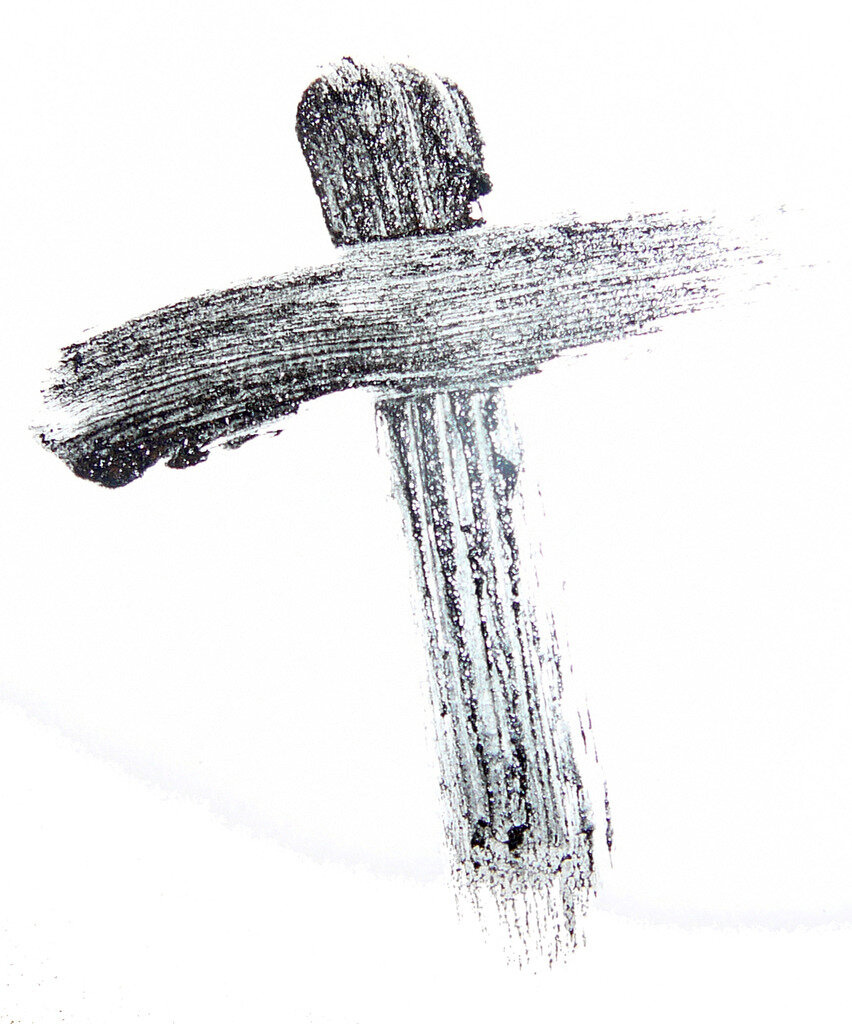
“Remember that you are dust, and to dust you shall return.”
More to Come,

James Hazelwood is a writer, photographer, and former bishop of the New England Synod of the ELCA. He publishes the Notebooks of James Hazelwood on Substack. www.jameshazelwood.net
—
The photographs accompanying this essay were made in Venice, Italy, during Carnival, February 2026. A More Complete display will appear on my PhotoStack Page next week.
Wonderful post - thanks, Jim.
Taking off the mask. Painful but helpful reminder and way to begin this 40 day journey. Thanks.