

Does it Taste?
Taste, Cooking, and Hospitality as Spirituality

The Holy Hiding in Your Taste Buds
Like a lot of teenagers, I grew up on a steady diet of grilled cheese sandwiches and chocolate milkshakes. My vegetarian aunt and a rotating cast of health-conscious girlfriends were convinced I wouldn’t see thirty.
Tonight in our house, I made dinner. Check it out in the video below or click here.

Today I love food. And the longer I sit with that love, the more I’m convinced it’s not a hobby. It’s a spiritual practice hiding in plain sight.
I enjoy a full range of tastes—sweet, bitter, sour, salty, and umami, the five flavors our tongue detects. Is there anything better than biting into a juicy orange, eating roasted chicken with rosemary, or just indulging in mint chocolate chip ice cream? Not all creatures enjoy this; cats can’t taste sweet, and neither can most birds except hummingbirds. This might explain why housecats lurk beneath feeders, perhaps plotting revenge.
I do not doubt that the experience of taste is a profoundly spiritual encounter with God’s holy creation. The late Eugene Peterson said it better than I can: wonder is the only adequate launching pad for exploring a spirituality of creation, the quality that keeps us open-eyed, expectant, and alive to a life that always exceeds our calculations. We find wonder in many places, but taste, to me, the most delightful of our five senses, is in a category all its own. How can you not believe the holy is present while you’re savoring some of the bounty of God’s creation?
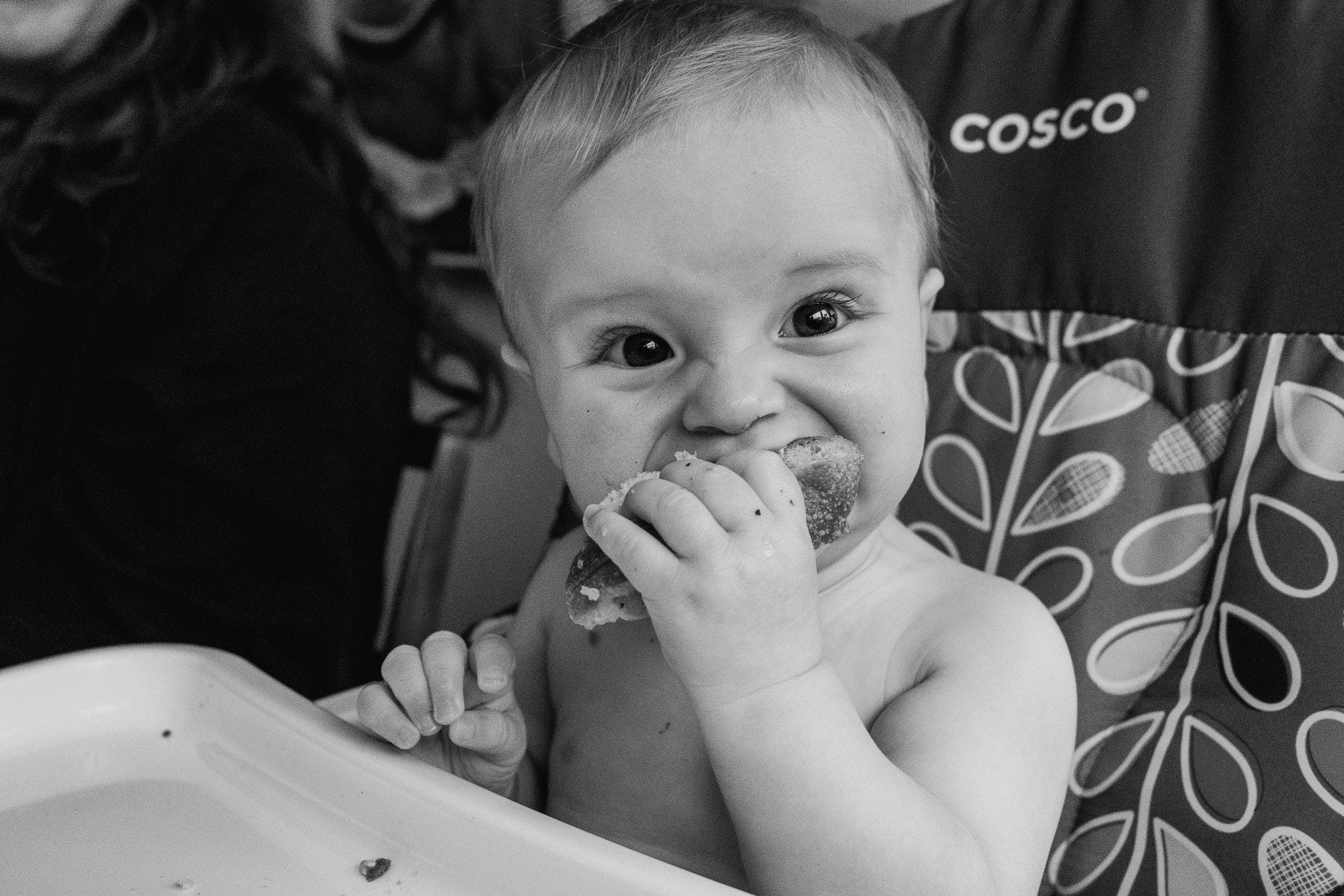
All the major religions of the world have something to say about food, which tells you something. The Hebrew Bible reads like a spice rack left open: cinnamon and myrrh in Exodus, dill and cumin in Isaiah, the wandering Israelites pining so hard for Egyptian cucumbers, melons, leeks, onions and garlic that you can practically hear their stomachs growl across three thousand years. Isaac asks his son Jacob for a savory dish before he passes on the family blessing. The risen Jesus eats breakfast fish with his disciples, because apparently, resurrection doesn’t cancel breakfast.
All this attention to taste and food is making me hungry. How about you? Maybe we should pause and eat something.
Breaking bread together is an act of holiness. Not just in a Buddhist center or a Christian cathedral. Did you know that when you sit down and eat a meal with another person, you are engaging in a spiritual discipline? It’s true. One act connects you to ancient traditions of hospitality, thanksgiving, and the goodness of the earth.

Christians have a sacrament for this, Holy Communion, our way of saying God is present not just in the bread but in, with, and under the whole meal and everything happening around it. The baby screaming in the corner. The old widow with wrinkled hands. The tattooed guy kneeling next to the banker in the blue blazer. The whole thing. I’ll push this further than some of my fellow theologians are comfortable with. I don’t think the holy stays parked at the altar. I think it shows up...
- around the Thanksgiving table
- in the dugout eating a hot dog
- during coffee with a friend
- at the company picnic
- across the table at the farmer’s market
- on the playground with kids
- in the college cafeteria
- with screaming toddlers at breakfast
Every one of those is a moment where the holy breaks in, whether anybody bothers to notice or not.
Leah Chase, the chef who fed Freedom Riders and reshaped American history out of a gumbo pot at Dooky Chase’s in New Orleans, understood this without needing a seminary degree. “You have to be in love with that pot,” she said. “You have to put all your love in that pot.” And, more plainly still: “Food builds big bridges. If you can eat with someone, you can learn from them, and when you learn from someone, you can make big changes.” That’s not a recipe tip. That’s theology with a wooden spoon in its hand.
According to a Harvard Business Review survey, only about ten percent of us love to cook, and forty-five percent flat out hate it. The rest of us are stuck in the lukewarm middle. I drift between loving it and tolerating it, depending on the season, mostly enthusiastic in summer and fading fast by February. My wife, fortunately, lives solidly in the loves-it camp. I won’t try to talk you out of whichever camp you’re in. But cooking, whether it delights you or merely gets endured, is a natural expression of everyday spirituality.

The three monotheistic religions, Christianity, Islam, and Judaism, all carry dietary rules with deep roots, and all three lean hard into food as gift and hospitality as grace. Traditional African religions place a high value on welcoming the stranger. In Buddhism, Hinduism, and the spiritual traditions of the Indian subcontinent, hospitality and almsgiving are themselves acts of devotion. The Lord’s Prayer asks for daily bread, and Martin Luther, who never left a phrase unexamined, explained in his Small Catechism that daily bread really means everything that supports the body: food, clothing, shelter, good government, good weather, faithful neighbors, the whole catalog of what keeps a person upright and well. Bread, in the end, is code for everything.
Chef José Andrés, who has spent decades feeding people in the aftermath of earthquakes, hurricanes, and wars, put words to this same impulse: “We all are Citizens of the World. What’s good for you, must be good for all. If you are lost, share a plate of food with a stranger... you will find who you are.” Feed the stranger, and you might just find yourself and your spirituality all at the same time.
None of this needs to be solemn, by the way. Anthony Bourdain, who spent a career insisting that food was never supposed to be a chore, put it this way: “I always feel a little guilty when I hear people complaining about the stuff they do in the kitchen. I’m like, what’s the matter with you? It’s food! It’s supposed to be fun!” He’s right, and so is Leah Chase, who insisted that everyone can cook if they try and put a little love into it. Somewhere between Bourdain’s mischief and Chase’s love affair with the pot, you get the whole picture. Cooking is serious enough to count as devotion and light enough to remain a pleasure.

So here’s the invitation. Next time you taste something good, pause for half a beat before the second bite and notice what’s happening: sunlight, soil, somebody’s labor, somebody’s love, arriving all at once on your tongue. Next time you cook, even if you’re squarely in that lukewarm forty-five percent, remember you’re joining a long line that runs through ancient, sacred meals and Leah Chase’s gumbo pot. Every culture, every scripture, every grandmother who ever fed a stranger has been telling us the same thing in a thousand languages. The holy isn’t hiding from your dinner table. It’s sitting right there, waiting for you to pass the salt.
Now, what’s for dinner? See what I made here.
More to Come,

James Hazelwood is a writer, photographer, and increasingly responsible for half the meals at home. www.jameshazelwoodphoto.com
If you haven’t already subscribed to my YouTube channel, I invite you to do so. Weekly videos appear and are currently ad-free. Click here.
I won't look at food the same again, and I'll savor every bite.
Oh, Jim, another brilliant, thought provoking and soul soothing message (your essay AND, dear comment reader, the video linked at the bottom.) Thank you for the opportunity to taste that glorious Mediterranean cod with you and Lisa.