

Is Gratitude Selfish?
What 'Thanks' Makes of Us

My grandchildren have been well coached. Upon receiving anything, such as a beverage, an ice cream cone, or a gift, they respond, “Thank you.” Granted, sometimes they need to be prompted, “What do you say?” The drawn-out “thaaank youuuu” can seem derogatory or overly genuine, but the long-term impact will, hopefully, be young men who carry an attitude of gratitude.
I consider the thank-you one of our smallest daily liturgies. We treat it as a transaction, almost an automatic reflex. The gratitude goes out, and the matter is closed.
This week’s video can be viewed here

This might be a common exchange at cash registers and around dinner tables. But anyone who has practiced gratitude knows a stranger truth. The one most changed by the thank-you is seldom the one who receives it, though the thank-you can be appreciated. The one offering gratitude is most affected. This is my hunch. When we give thanks, we are altered. The alteration is the point.
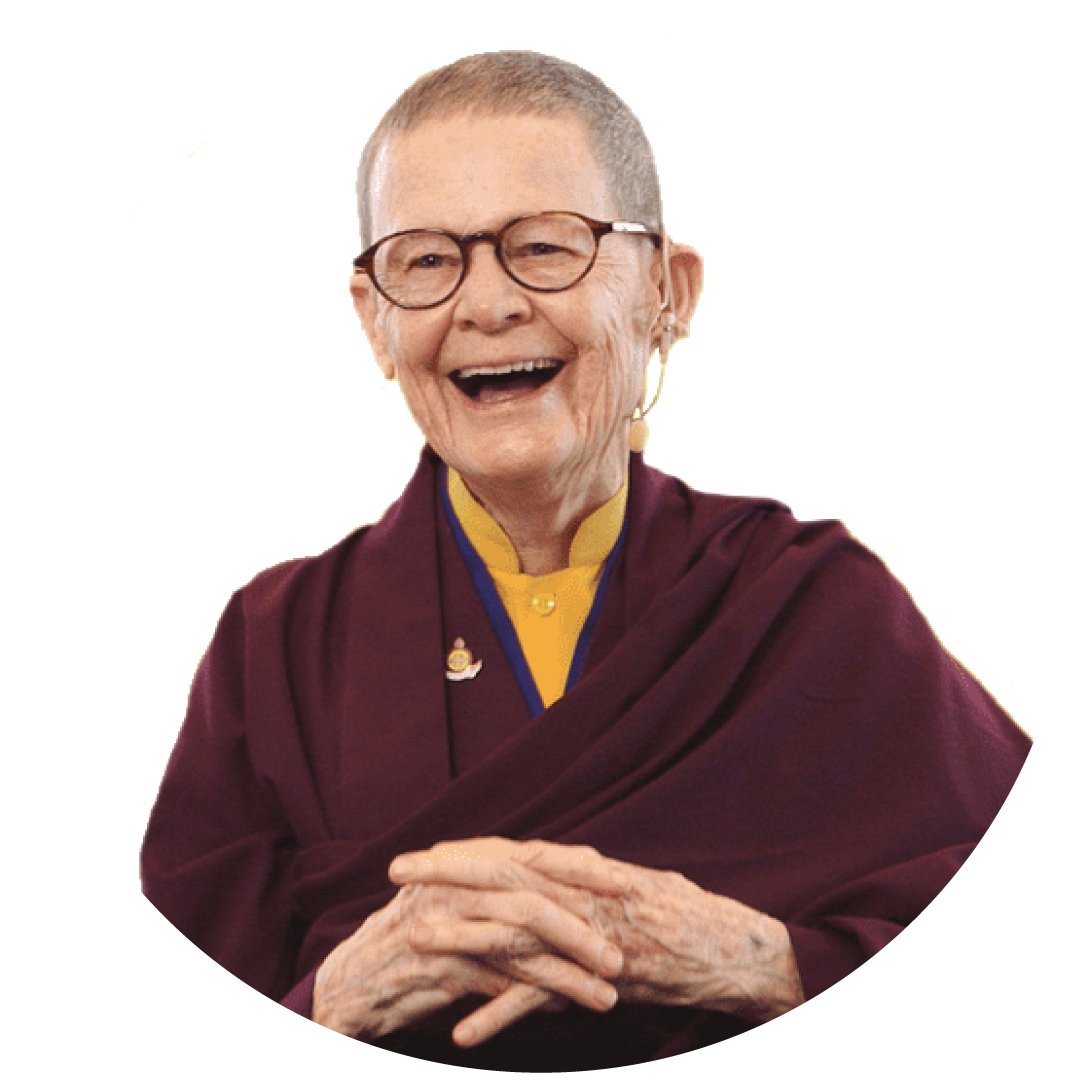
Pema Chödrön, an American Buddhist nun whose writings have quietly supported many through difficult times, emphasizes that practice isn’t about fixing the world or improving circumstances. Instead, it’s about facing life as it is, without defenses. She uses the term ‘maitri,’ meaning loving-kindness, to describe the warmth we first extend to ourselves and then to others. Gratitude is also part of this family of practices. It doesn’t depend on life being perfect; it simply involves recognizing what already sustains us.
The phrase ‘sustains us’ more accurately captures the Buddhist concept of gratitude than our typical greeting-card expression. Interdependence teaches us that nothing exists in isolation: the bread on the table embodies the rain, the fields, a stranger’s effort, and an unbroken chain of human labor. Giving thanks in this context is not mere politeness; it’s an acknowledgment of reality. It’s a recognition of how deeply we are supported by things we did not create and can never fully repay.
People who are aware of being carried tend to be humbler. Here’s how it works, as far as I can tell. The ungrateful self is grasping, always convinced it is owed more and constantly comparing what it has with what it thinks it deserves. Gratitude interrupts this cycle. For a moment, the self ceases to be the center of everything and becomes a receiver, a guest. The small king of our desires is temporarily dethroned. Although uncomfortable, this also offers a form of freedom. We cannot feel grateful and entitled at the same time.
Many traditions have recognized this, integrating gratitude into daily practice. The observant Jew begins the day with Modeh Ani, expressing thanks before any other activity, before thoughts or grievances form. Christians call their main meal the Eucharist, from the Greek word for thanksgiving, to rehearse gratitude as a core act. Muslims incorporate praise and thanks to God, using phrases like alhamdulillah, meaning ‘praise and thanks be to God,’ into everyday speech. Meister Eckhart, the 13th-century Dominican mystic, said that if “thank you” is the only prayer you ever utter, it suffices. Despite their many differences, these traditions share a common emphasis on gratitude.
Brother David Steindl-Rast, a Roman Catholic Benedictine monk with years of dialogue with Buddhist teachers, clearly expressed this reversal. “It is not happiness that makes us grateful,” he said. “It is gratefulness that makes us happy.” Consider that carefully. Most of us live in the opposite direction, waiting until life provides something to be grateful for before feeling grateful. The contemplatives, however, turn this around—practicing gratitude first, with happiness as the natural consequence.

Recently, scientists have caught up with monasteries. Researchers encouraging people to keep gratitude journals, listing things they did not have to earn, report clear improvements in well-being, sleep, and feelings of warmth in relationships. Studies show that gratitude works.
What I find most helpful in Chödrön’s writing is her refusal to confine gratitude to days when all is well. She focuses on the moment when everything falters. Even then, she emphasizes the importance of staying open rather than shutting down. Gratitude in these moments isn’t denial; it doesn’t deny the loss. Instead, it rejects the idea that loss is the only reality. Expressing thanks, even in darkness, for the hand still holding ours is one of the bravest acts, and it transforms the person who chooses to do it.
I keep restarting a practice of gratitude. I’m trying to offer thoughtful, sincere thank-yous instead of quick ones. While the world hasn’t changed, just read the news, my perspective shifts, albeit slightly. I’m less a creditor and more a guest in unarranged circumstances. This practice isn’t about changing the world but transforming myself, as gratitude subtly influences us when expressed.
“Be grateful for your life, every detail of it, and your face will come to shine like a sun, and everyone who sees it will be made glad and peaceful.”
The Islamic Poet, Rumi
More to come,

James Hazelwood is a writer and photographer. His book, Everyday Spirituality, didn’t win any prizes, but a few people thought it was pretty good.
Thank you for another lovely and thoughtful message. I really like the music that you used to accompany the video--bouncy and happy! Your words provide enlightenment, inspiration and some joy in this rather fretful world. Just the right tonic for me today!
Rejoice ALWAYS. Again, I say, rejoice. Surviving the many dangers of cycling helps produce gratitude. Way to stay upright.