

Unfinished Thoughts
A New Supplement to Notebooks

Welcome to this once-a-month extra. In the future, it will be for paid subscribers only, though you’ll get a glimpse of it each month… I think. (Still learning how to use this Substack platform.)
Unfinished thoughts will collect some random notes on projects and ideas, kind of behind the scenes in my brain. (A frightening prospect) I’ll include what I’m reading and watching as part of it. But mostly, I plan to collect shorter musings that don’t seem to fit into the now-weekly format of my Wednesday newsletter.
Feel free to upgrade to a paid subscription to support my work. I truly appreciate your generosity. The first edition is free to everyone…enjoy.
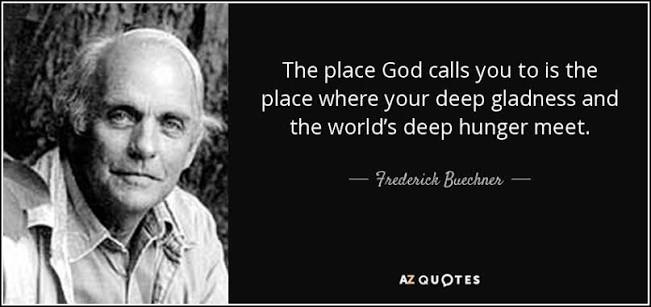
Frederick Buechner turns 100
On July 11, the sage from Exeter, New Hampshire, would have turned 100. I submitted a short reflection for this milestone, and it’ll be included in the Buechner Review. I’ll let you see it first here:
When I was a seminary student, a friend casually handed me The Alphabet of Grace. I opened it and heard a voice I had never heard in the classroom. Here was a man writing about an ordinary morning of breakfast with children or the city street outside his window as if it were scripture. For Buechner, it was scripture. He was not explaining faith so much as noticing it. He paid attention to the world with a reverence I thought was reserved for ancient texts. The alphabet of grace, he insisted, was written everywhere, if you had eyes to see it. That was the window he opened for me, the window between everyday life and faith. He showed me that an ordinary, unremarkable, grocery-list life was itself a kind of holy text. I spent decades in the church, eventually becoming a bishop, bearing the responsibilities of the institution and its associated doctrines. Yet beneath it all, the voice I first heard at twenty-three continued to sustain me. Buechner’s writings over the years encouraged me to listen intently, be vulnerable, and embrace the beauty of the broken.
The rest of the Buechner 100 Review will appear on July 11. You can preview it here.
The Sin of Optimization & Efficiency
The word “sin” has kind of fallen out of favor. People who grew up in oppressive homes dominated by an unhealthy spirituality might have experienced the word as punishment, criticism, perhaps even abuse or trauma. But its original meaning connects to some things in modern life. Essentially, the word means missing the mark, as an archer aiming an arrow but missing the target.
I’ve been wondering if the way we are missing the point of life these days might be due to our obsession with productivity, optimization and efficiency. Senator Chris Murphy gave a great commencement address in which he critiqued efficiency as the idol of our time.
But I guess what I’m asking you is this: What happens to us, on the inside, when every interaction, every aspect of our lives, gets optimized for efficiency? When the whole world is at our fingertips, yet we don’t actually experience the world.
Yes, we are optimizing our time. But we aren’t happier. In fact, I think all of these things make us feel the opposite. Sen. Chris Murphy
I can’t help but wonder if our hyper drive to succeed is taking us away from ourselves and our souls. We might get more done, but is this any way to live?

Creativity and Making Meaning
Last month, I worked on an essay I never published, though I may in the future. The premise grew out of a line from a book I was reading, Art & Fear, by the painter David Bayles and the photographer Ted Orland. While humming along through the chapters, I suddenly came across this line. “The meaning of the world is made, not found.” Buried in the middle of a paragraph about Hamlet, I read those words maybe 17 times. They lit upon me like a revelation, as if a chorus of bodhisattvas or angels, or both, had begun singing a magical tune.
Since then, I’ve been diving into the idea that the meaning of life isn’t something to be found but something we make. Or, more precisely, maybe it’s in the making that we find meaning. I’m not sure, but I think I’m on to something.
Carl Jung, or was it Joseph Campbell, one of those mythmaking dudes, wrote about building your own mythology, a narrative around your life. Mine is made up of life events, quirky movies, a Herman Hesse novel, songs from the 1970s, and the poetry of Mary Oliver, Basho, and Rainer Maria Rilke, plus some great meals along the way.
I’ve spent much of my life searching for the meaning of life, as if it were something out there. But maybe the search has been misdirected or ill-informed. Maybe meaning is found in the making of… essays & books, photographs, journals with poor line drawings, and leading communities on travels and discovery.
There’s an essay here, maybe something more, but I’m still basking in the glow of that heavenly chorus and processing the synapses firing in my brain.
Watching, Reading, and Listening
Sports
Following the World Cup has been a delight, though I have to admit I haven’t had the stamina or the attention to sit in front of a TV for 90 minutes. The highlight reels have been a joy. The same goes for the beauty of the WNBA. Yes, I’m thrilled for the Knicks, but I gotta tell you, women’s basketball is so much more fun to watch. The passing game alone is a dance of beauty.
Trash, yes Trash!
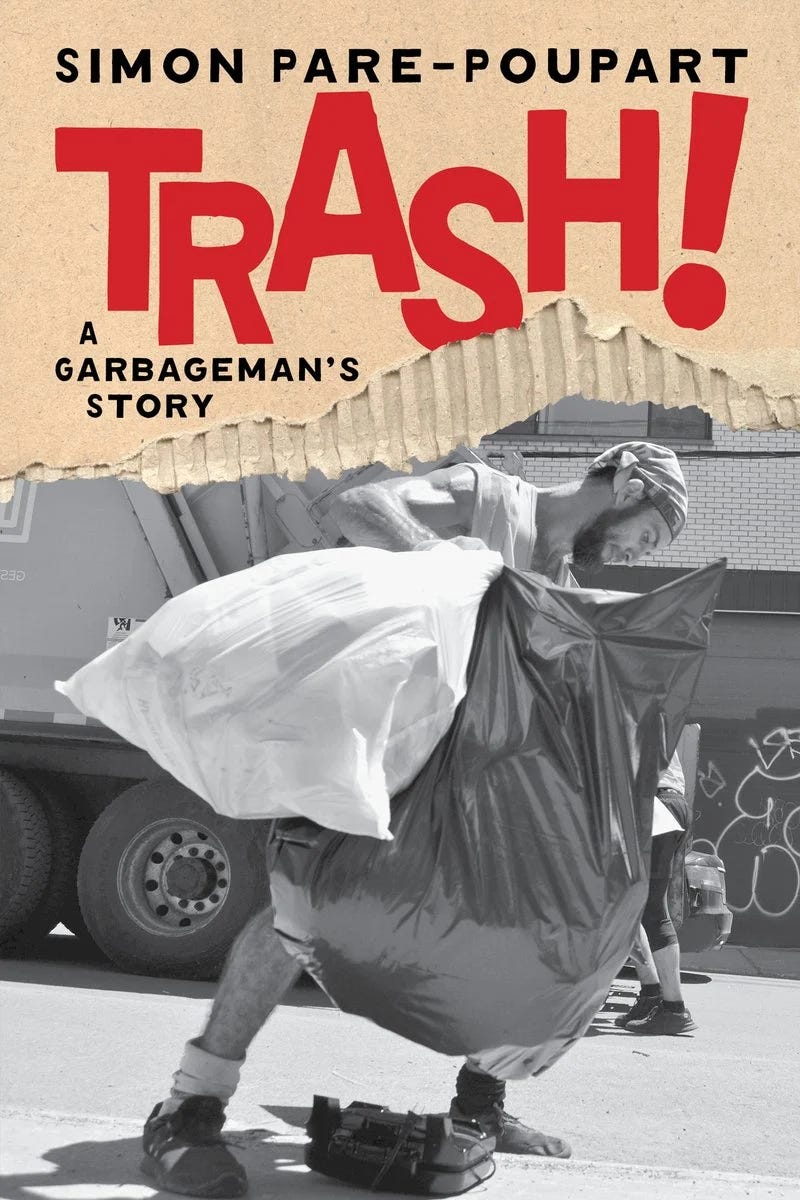
This small book by a Montreal garbage collector and part-time philosopher is highly recommended. ‘Trash! A Garbageman’s Story’ is a memoir by Simon Paré-Poupart, a French-Canadian who has spent 20 years working in waste management in Montreal. It provides a candid, street-level view of the city’s blue-collar work scene and critiques the widespread overconsumption and wastefulness of contemporary society.
Robert Plant
Led Zeppelin never caught my attention in the 1970s. Maybe I was jealous of that frontman, able to romp all over the stage shirtless. But in the last 20 years, Robert Plant has continued to create unique music. Last November, Lisa and I traveled to the Schubert Theatre in Boston to hear his band, Saving Grace. What a night. Along with his work with Allison Krauss, Plant revisits musical genres from blues to Appalachia to rock ‘n’ roll with a freshness I haven’t often found. Along the way, he gave voice to a depth of soul at the heart of the human experience. OK, his early lyrics, like many 22-year-olds, focused on love lost and lust, but in recent times, he’s voiced notes of grace and wonder. Also, how can a 78-year-old man be so cool? He reinvented the old blues/Zeppelin tune Ramble On during an appearance on Stephen Colbert’s Late Show this past May. Enjoy!
More to Come

Unfinished Thoughts will appear monthly for paid supporters only, starting next month. The weekly, mostly weekly, Notebooks of James Hazelwood (Wednesdays) will continue for all subscribers.
James Hazelwood is a writer, photographer and storyteller. He now makes dinner and takes out the garbage on Tuesday nights. www.jameshazelwoodphoto.com
Your quote by David Bayles, “The meaning of the world is made, not found,” reminded me of Dr. Martin Luther King, Jr.s words: "Like life, racial understanding is not something that we find but something that we must create. What we find when we enter these mortal plains is existence; but existence is the raw material out of which all life must be created. A productive and happy life is not something that you find; it is something that you make.…"
I hope you'll keep working on that essay!
"Where Do We Go From Here: Chaos or Community," 1968, p28